
Author
MCP (Model Context Protocol) is a future-focused concept that is becoming essential for building AI agents and advanced AI systems.
It standardizes how AI models interact with external tools, services, and data sources in a structured and scalable way.
? In Spring AI, MCP enables developers to build intelligent, tool-aware systems that go beyond simple text generation and can interact with real-world applications.
MCP (Model Context Protocol) is a standardized approach that enables AI models to interact with external systems in a structured and intelligent way.
It allows AI to:
In simple words: MCP acts like a bridge between AI and real-world applications, enabling seamless communication between models and external systems.
It helps AI understand:
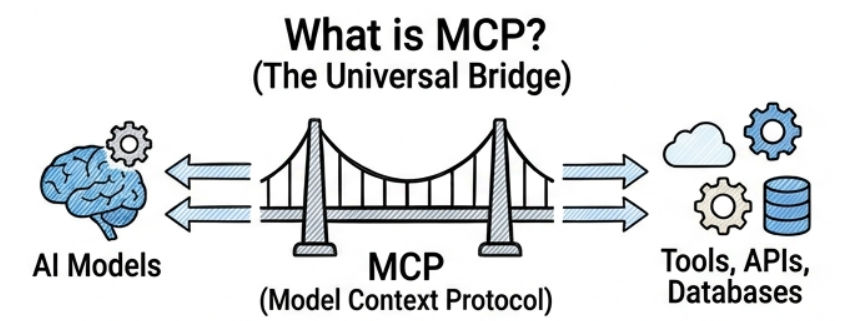
? This makes AI systems more dynamic, context-aware, and capable of real-world interactions.
Modern AI systems are no longer limited to answering questions — they are expected to perform real-world actions and interact with multiple systems.
MCP enables:
? This transforms AI from a simple chatbot into an intelligent, action-driven agent capable of executing tasks and making decisions.
Example (Conceptual Flow in Code)
String query = "Check my order status";

// Step 1: Detect intent
if (query.contains("order status")) {

    // Step 2: Call backend service (tool)
    String orderData = orderService.getOrderStatus("user123");

    // Step 3: Generate response using AI
    String response = chatClient.prompt()
            .user("Explain this order status: " + orderData)
            .call()
            .content();

    System.out.println(response);
}
AI understands intent → calls backend service → uses real data → generates intelligent response.
| Feature | Traditional APIs | MCP-Based Systems |
|---|---|---|
| Integration | Manually integrated with fixed endpoints | Dynamically integrated using AI-driven context |
| Flexibility | Low flexibility with predefined logic | High flexibility with dynamic decision-making |
| Tool Usage | Tools and APIs are hardcoded in application logic | AI automatically selects and uses tools when needed |
| Scalability | Limited due to tight coupling | High due to loosely coupled and modular design |
| Context Handling | Minimal or manually managed | Structured and context-aware across services |
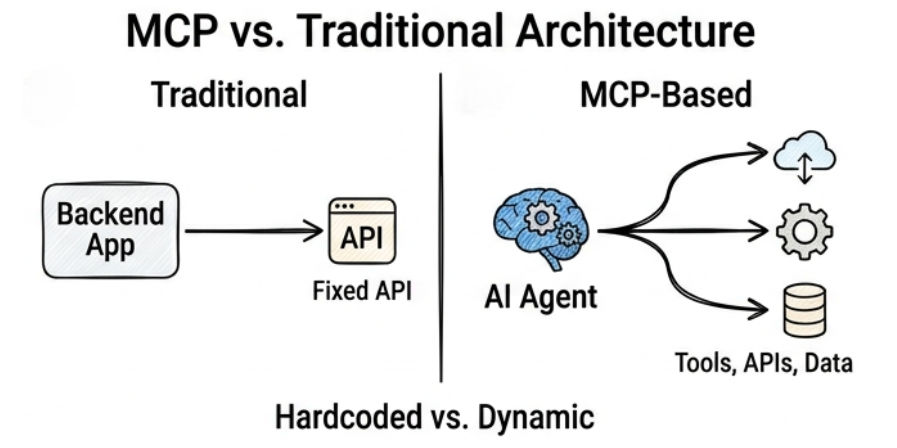
? MCP allows AI to dynamically choose and use tools instead of hardcoding logic.
A typical MCP-based system follows a structured and intelligent execution flow:
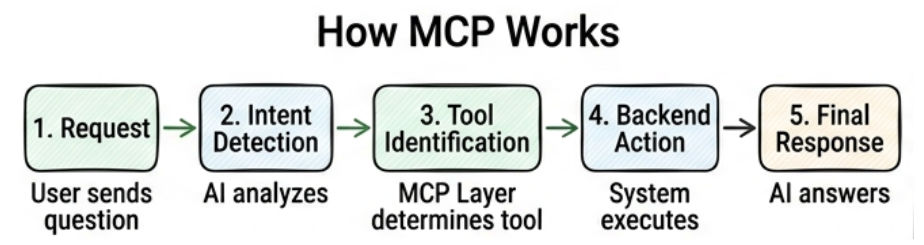
? Result → Accurate, real-time, context-aware, and actionable response.
With MCP, AI can dynamically call tools or backend services whenever required.
Instead of hardcoding API calls, the AI intelligently decides which tool to use based on the user’s request.
Example Flow:
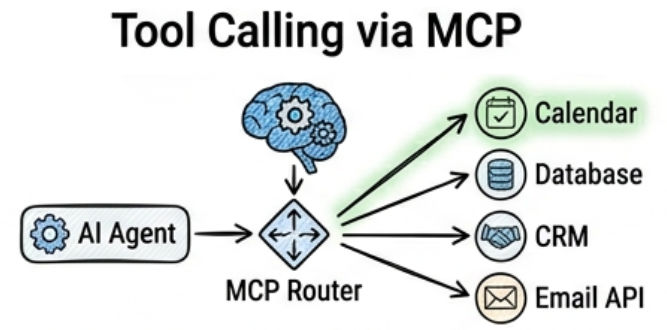
This enables real-world automation, dynamic tool usage, and intelligent task execution.
Example (Java Concept)
if (userQuery.contains("meeting")) {

    // Call calendar tool via MCP-style logic
    calendarService.scheduleMeeting("Tomorrow");

    return "Meeting scheduled successfully.";
}
? AI detects intent → MCP triggers tool → system performs action → AI responds.
MCP enables seamless context sharing across multiple systems, allowing AI to access and combine data from different sources.
Instead of working in isolation, AI can use unified context from various services to generate better responses.
Example sources:
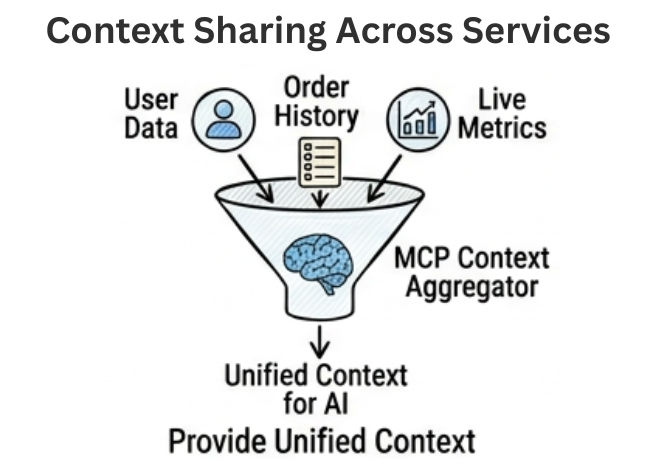
AI aggregates this context and uses it to generate more accurate, personalized, and context-aware responses.
Example (Conceptual Flow in Code)
String userData = userService.getUser("user123");
String orderData = orderService.getOrders("user123");

String response = chatClient.prompt()
        .user("User Info: " + userData +
              " Orders: " + orderData +
              " Explain current status")
        .call()
        .content();

System.out.println(response);
? Multiple services provide context → MCP combines data → AI generates intelligent response.
In Spring AI, MCP works as a structured integration layer between AI models and backend services, enabling intelligent and tool-aware interactions.
Instead of directly calling APIs, the system uses MCP to manage context, tools, and execution flow in a more dynamic way.
Architecture Flow:
This creates a loosely coupled, tool-integrated, and agent-ready architecture suitable for modern AI applications.
Example (Conceptual Flow in Code)
String query = "Get my order details";

// Step 1: Send request
String response = chatClient.prompt()
        .user(query)
        .call()
        .content();

// Step 2: MCP-style tool handling (conceptual)
if (query.contains("order")) {
    String data = orderService.getOrderDetails("user123");
    return "Order Details: " + data;
}

return response;
? ChatClient → MCP decision → Backend execution → AI response generation.
public class MCPService {

    private final BookingService bookingService;

    public MCPService(BookingService bookingService) {
        this.bookingService = bookingService;
    }

    public String handleRequest(String userQuery) {

        // Step 1: Detect intent
        if (userQuery.contains("meeting")) {

            // Step 2: Call backend tool
            bookingService.bookMeeting("Tomorrow");

            // Step 3: Return response
            return "Meeting scheduled successfully";
        }

        return "No valid action found";
    }
}
? AI detects intent → MCP triggers the appropriate tool → backend service executes the action → system returns a meaningful response.
MCP is widely used in modern and advanced AI systems where real-world interaction and automation are required.
? These use cases show how MCP enables AI to move beyond simple responses and become action-driven, intelligent systems.
User: “Send me last month’s sales report.”
? AI combines all steps and returns a confirmation response to the user.
? These benefits make MCP a strong foundation for building intelligent, scalable, and production-ready AI systems.
MCP Protocol is a key concept for building next-generation AI systems and intelligent agents. It enables AI to connect, understand, and interact across multiple systems, making applications more dynamic, powerful, and action-driven.
By using MCP, developers can build scalable, automated, and enterprise-grade AI applications that go beyond simple responses and perform real-world tasks efficiently.
