
Author
Software architecture determines how applications are built, scaled, and maintained. Two common approaches are Monolithic Architecture and Microservices Architecture. Choosing the right architecture is critical for scalability, maintainability, and team productivity.
A monolithic architecture is a traditional design where all application components are tightly integrated into a single codebase and deployed as one unit.
Example:
An e-commerce monolith may include:
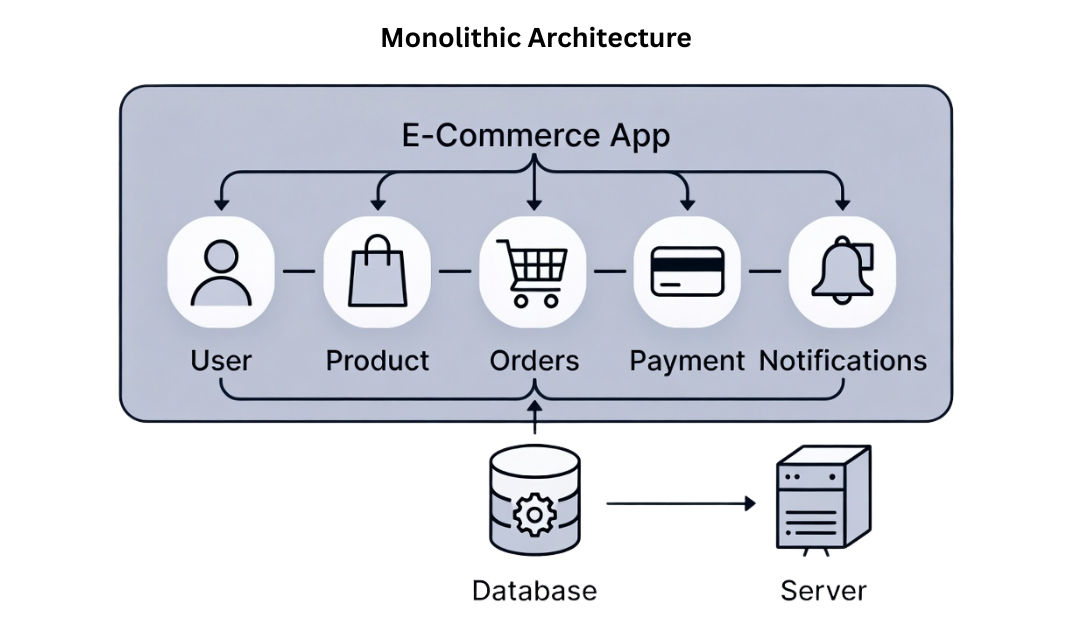
Structure:
src/main/java/com/example/ecommerce/
 ├─ controller/
 │   └─ OrderController.java
 ├─ service/
 │   └─ OrderService.java
 ├─ repository/
 │   └─ OrderRepository.java
 └─ model/
     └─ Order.java
Controller Example:
@RestController
@RequestMapping("/orders")
public class OrderController {

    @Autowired
    private OrderService orderService;

    @PostMapping
    public Order createOrder(@RequestBody Order order) {
        return orderService.processOrder(order);
    }
}
Service Example:
@Service
public class OrderService {

    @Autowired
    private OrderRepository orderRepository;

    public Order processOrder(Order order) {
        // Process payment logic (simplified)
        order.setStatus("PAID");
        return orderRepository.save(order);
    }
}
Repository Example:
@Repository
public interface OrderRepository extends JpaRepository<Order, Long> {}
? All features run in the same application. Any small change requires redeploying the whole system.
Monoliths are simple to start with but have limitations as applications grow.
Common Challenges:
Microservices Architecture divides an application into small, independent services, each responsible for a single business capability.
Key Characteristics:
Example:
An e-commerce microservices setup:
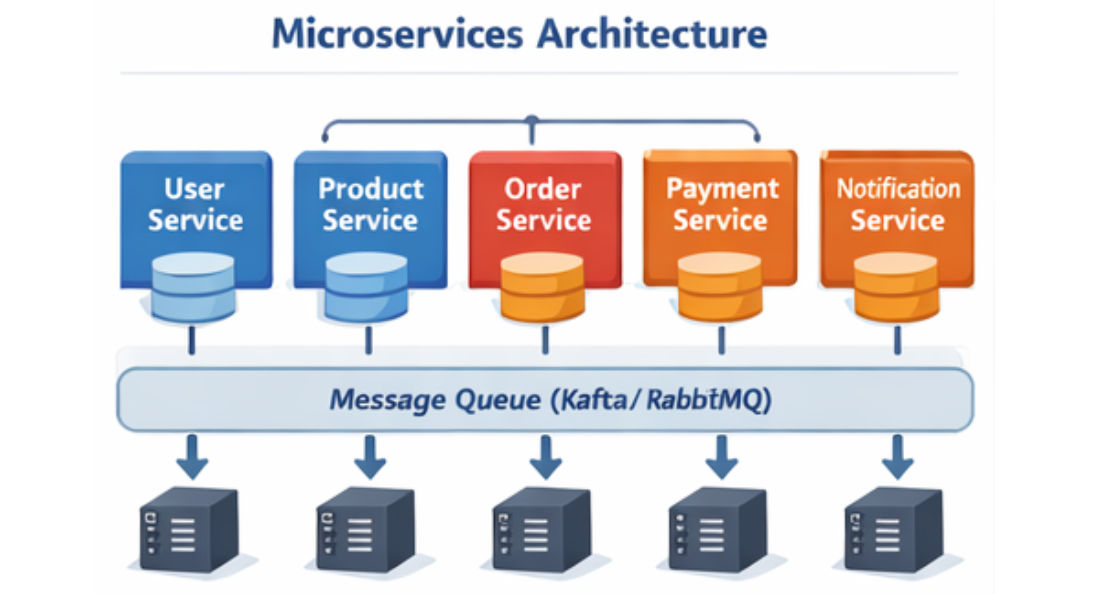
Each service can:
Controller:
@RestController
@RequestMapping("/orders")
public class OrderController {

    @Autowired
    private OrderService orderService;

    @PostMapping
    public Order createOrder(@RequestBody Order order) {
        Order saved = orderService.saveOrder(order);
        // Call Payment Service via REST
        RestTemplate rest = new RestTemplate();
        rest.postForObject("<http://localhost:8081/payments>", saved, Payment.class);
        return saved;
    }
}
Service:
@Service
public class OrderService {

    @Autowired
    private OrderRepository orderRepository;

    public Order saveOrder(Order order) {
        order.setStatus("PENDING");
        return orderRepository.save(order);
    }
}
Controller:
@RestController
@RequestMapping("/payments")
public class PaymentController {

    @PostMapping
    public Payment processPayment(@RequestBody Order order) {
        Payment payment = new Payment();
        payment.setOrderId(order.getId());
        payment.setStatus("SUCCESS");
        return payment;
    }
}
? Each service runs separately, can have its own database, and can scale independently.
| Feature | Monolithic Architecture | Microservices Architecture |
|---|---|---|
| Codebase | Single large codebase | Multiple small codebases |
| Deployment | Single unit | Independent per service |
| Scalability | Scale entire application | Scale individual services |
| Technology Stack | One tech stack | Multiple tech stacks |
| Fault Isolation | Poor | Strong |
| Development Speed | Slows as app grows | Faster with multiple teams |
| Database | Shared database | Database per service |
| Best For | Small/simple apps | Large, complex systems |
Migrating to microservices should be gradual to reduce risk.
Best Practices:
When Monolith Works Best:
Examples: Basic blogging platforms, internal tools
When Microservices Are Better:
Examples:
There is no one-size-fits-all architecture:
Best Practice: Choose the architecture that fits your current needs while planning for future growth. Proper selection leads to better performance, lower costs, and long-term maintainability.
