
Durgesh Tiwari
Author
Natural Language Processing (NLP) is a branch of Artificial Intelligence that helps computers understand, process, and generate human language. It acts as a bridge between human communication and computer systems, allowing machines to work with both written and spoken language.
Today, NLP powers many technologies, including chatbots, virtual assistants, search engines, translation tools, and modern AI applications such as ChatGPT.
In this chapter, you will learn what NLP is, how text processing works, how machines understand language, and the most common applications of Natural Language Processing.
Natural Language Processing (NLP) enables computers to understand the meaning of human language and respond in a useful way.
Unlike traditional computer systems that only process structured data, NLP allows machines to analyze text, understand context, identify intent, and generate human-like responses.
Voice assistants like Siri, Alexa, and Google Assistant
Language translation tools
Search engines
AI chatbots
Email spam filters
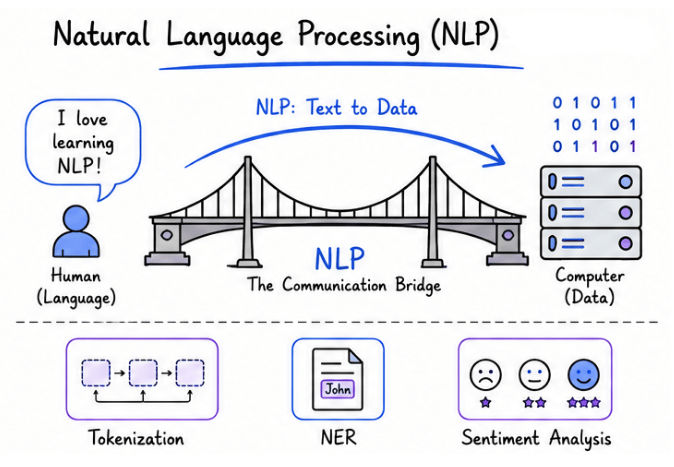
These applications help computers interact with people more naturally and efficiently.
Before computers can understand language, text must be cleaned and organized into a format that machines can process.
Human language contains spelling variations, punctuation, abbreviations, and different writing styles. Text processing helps standardize this information and improve analysis accuracy.
Breaks text into smaller units such as words or sentences.
Example:
"I love learning Artificial Intelligence."
↓
I | love | learning | Artificial | IntelligenceRemoves commonly used words that add little meaning.
Example:
"The cat is sitting on the chair."
↓
"cat sitting chair"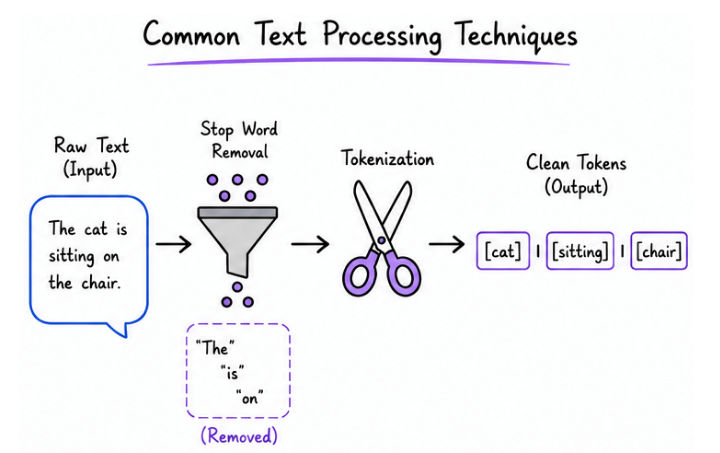
Reduces words to their root form.
Examples:
Playing → Play
Played → Play
Plays → Play
Converts words into their dictionary form while preserving meaning.
Examples:
Running → Run
Studies → Study
Better → Good
Lemmatization is generally more accurate than stemming.
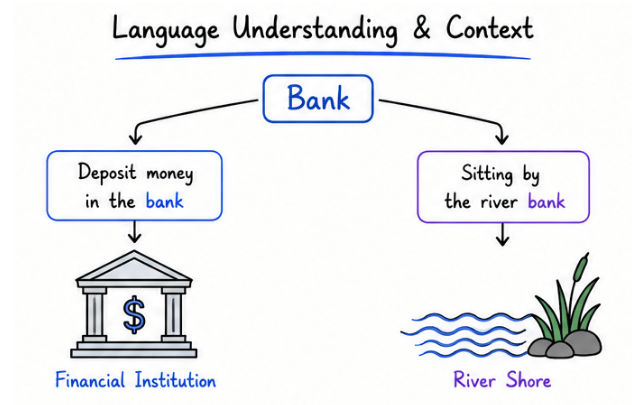
After processing text, NLP systems try to understand its meaning and context.
Since the same word can have different meanings in different situations, language understanding is one of the most challenging parts of NLP.
Example:
The word "Bank" may refer to:
A financial institution
The side of a river
NLP models use context to identify the correct meaning.
Identifies the grammatical role of words in a sentence.
Example:
"The student reads a book."
Student → Noun
Reads → Verb
Book → Noun
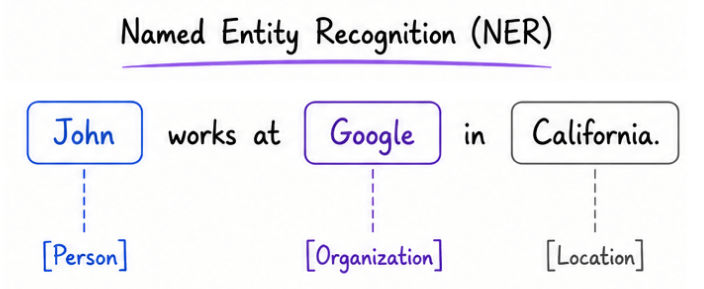
Detects important entities such as:
People
Organizations
Locations
Dates
Example:
"John works at Google in California."
John → Person
Google → Organization
California → Location
Determines whether text expresses a positive, negative, or neutral opinion.
Example:
"This course is excellent and easy to understand."
→ Positive Sentiment
Allows AI systems to generate human-like text for conversations, summaries, content creation, and question answering.
Modern AI assistants such as ChatGPT use advanced language generation techniques.
Natural Language Processing is widely used across different industries and digital platforms.
Chatbots and Virtual Assistants: Help users ask questions, receive information, and perform tasks through natural conversations.
Machine Translation: Converts text from one language to another using AI-powered translation systems.
Search Engines: Understand user intent and deliver more relevant search results.
Sentiment Analysis: Helps businesses analyze customer feedback, reviews, and social media conversations.
Spam Detection: Identifies unwanted or suspicious emails automatically.
Text Summarization: Creates short summaries from long documents, reports, or articles.
Content Recommendation: Supports personalized recommendations on platforms such as YouTube, Netflix, and news websites.
Natural Language Processing (NLP) helps computers understand, analyze, and generate human language. It combines text processing and language understanding techniques to make communication between humans and machines more effective.
Today, NLP is used in chatbots, search engines, translation tools, virtual assistants, spam filters, and many modern AI applications. It also provides the foundation for advanced technologies such as Large Language Models (LLMs), Generative AI, conversational AI, and intelligent AI assistants.
